


Recorded Books is RBmedia’s flagship audio brand for bestselling authors and content

Where to Find
Looking for digital audiobooks?
Discover thousands of audiobook titles published by Recorded Books and distributed to millions by every leading digital retailer and major library platform.
Looking for audiobooks on CD?
As of Oct. 1, 2020, Blackstone Publishing will manufacture, sell, and distribute audiobook CDs published by Recorded Books. Libraries can order CDs and replacements here.
Looking for help with RBdigital?
OverDrive acquired the RBdigital platform in 2020. Libraries and their patrons should contact OverDrive for more information about digital services.
How We Distribute
We have the broadest distribution network in the business. Our key partnerships with all major digital distribution outlets mean Recorded Books’ premier audiobooks reach
everyone… everywhere.
News
RBmedia Names Digital Media Veteran as New CEO
RBmedia today announced Michael Paull as its new Chief Executive Officer and member of the Board of Directors. Paull brings decades of digital media and technology industry expertise to RBmedia. He was most recently the President of Disney’s Direct to Consumer businesses, preceded by senior leadership roles at Amazon Digital Video and Digital Music, Sony Music Entertainment, and Sony Pictures Entertainment. Paull will succeed former CEO Tom MacIsaac.
RBmedia Titles Shine on Key Award and Bestseller Lists
RBmedia today announced that it is the audiobook home for book-to-screen adaptations nominated for three Academy Awards for Best Picture, as well as titles that garnered two Audie Awards, a TODAY show book club pick, a Carnegie medal, two Youth Media Awards, more than a dozen New York Times bestseller rankings, and multiple other literary awards just since the beginning of this year.
V.E. Schwab signs seven-audiobook deal with Éditions Thélème
Les Éditions Thélème, RBmedia’s French-language publishing brand, has acquired the French audio rights to seven titles from New York Times bestselling American author V.E. Schwab.
Digital Retailers
As an RBmedia audio brand, the Recorded Books distribution network includes every leading digital retailer in the business and reaches millions of listeners around the globe.







Library & School Platforms
Our key partnerships with all of the leading library platforms make it easier than ever for libraries to build, manage, and share a collection of popular digital content with their patrons.



Authors & Agents
We know what it takes to make a great audiobook recording. And you’ll be in great company with thousands of bestselling authors who have chosen RBmedia as their audiobook partner.
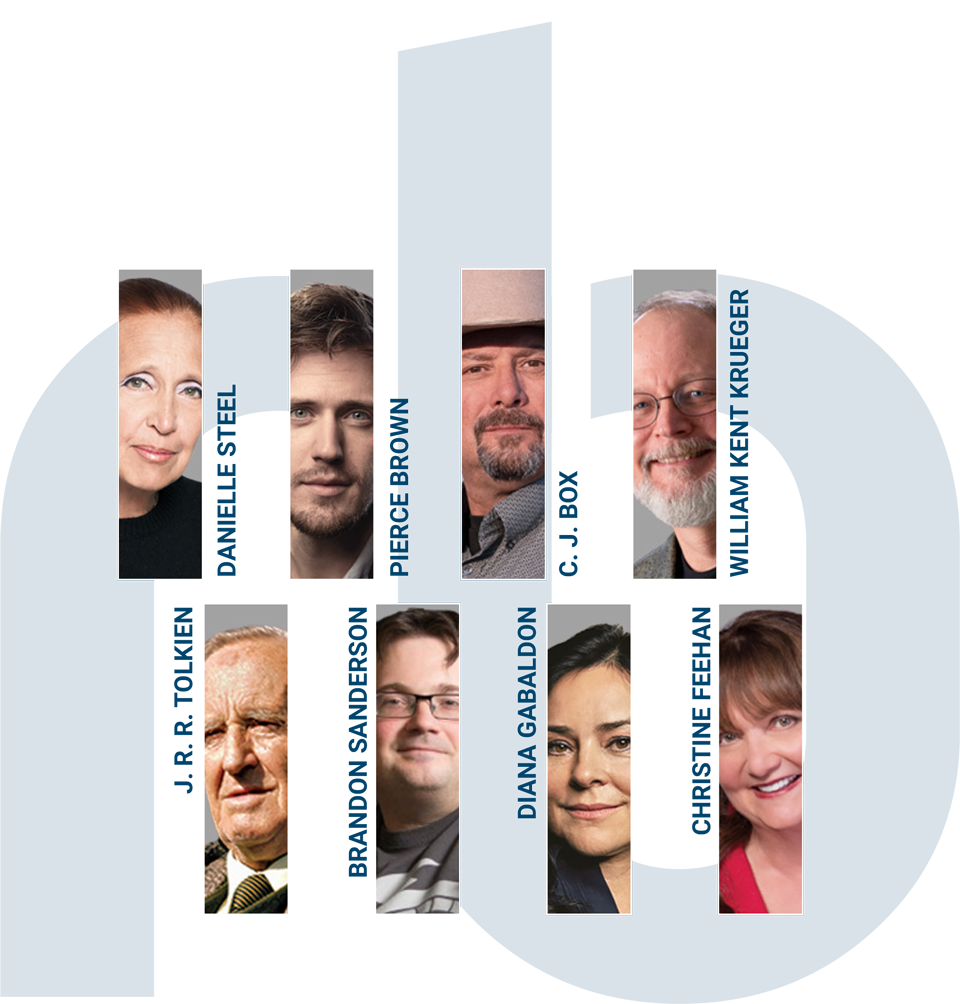
- J.R.R Tolkien
- Danielle Steel
- Brandon Sanderson
- Pierce Brown
- C.J. Box
- Diana Gabaldon
- William Kent Krueger
- Christine Feehan
- Joanne Fluke
- Donna Leon
- Jeff Kinney
- Dannika Dark
- Jude Deveraux
- Jayne Ann Krentz (Amanda Quick)
- Kristan Higgins
- Alison Weir
- Anne Perry
- James S. A. Corey
- Alexander McCall Smith
- Robyn Carr
- Charlaine Harris
- Linda Lael Miller
- Sherrilyn Kenyon
- Sabrina Jeffries
- Fern Michaels
- Laurie R. King
- Francine Rivers
- David Ignatius
- Carl Weber
- Benedict Jacka
- And many more
Recorded Books is the original audiobook publisher
Recorded Books at a Glance
Headquartered in Landover, MD, Recorded Books was founded in 1979 as an alternative to traditional radio programming. As the original audiobook publisher, with a proven track record of the highest-quality productions and voice actors, we know what it takes to make a great audiobook recording.

- We use award-winning voice actors and directors at our professional studios in New York and Connecticut.
- Our exclusive catalog of premium titles, narrated by award-winning actors, includes works by Danielle Steel, J.R.R. Tolkien, Jeff Kinney, Charlaine Harris, Alexander McCall Smith, and many other leading authors.
- Our content spans all high-demand fiction and nonfiction genres, including romance, business, comedy, education, mystery, sci-fi/fantasy, biography, classics, and children’s titles.
- Since our founding in 1979, we’ve achieved thousands of industry honors, including the National Book Award, Audiobook of the Year, Golden Voice, AudioFile Earphones, Cybils, Voice Arts, Youth Media, and Audie awards.